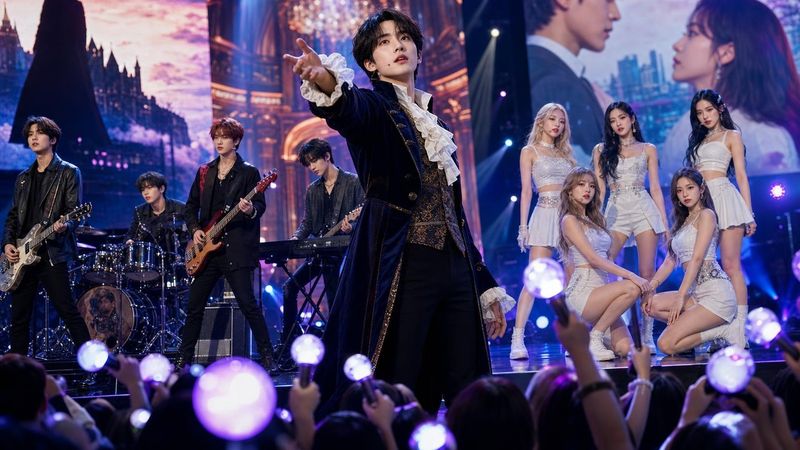
Watch a weekly clip from a Korean music show today and you might see a Beetlejuice solo or a fictional K-drama band squeezed between idol groups. M Countdown in particular is turning its once idol centered broadcast into a cross genre showcase.
For years, programs like this were built around digital charts, comeback stages, and trophy races. Now they are reacting to streaming era habits and falling live ratings. That shift is not only about survival, it is changing what fandom looks like in the K-pop world.
How Korean Music Shows Are Rewriting the Rulebook
Weekly music shows like M Countdown, Music Bank, and Inkigayo once acted as the main launchpad for new singles. Idol teams cycled through tightly scheduled comeback stages, and fans focused on live broadcasts, chart points, and trophies as proof of success.
That system has been shaken by streaming platforms and short-form video. Viewers now prefer streaming services and clips, hunting down official YouTube uploads or fan cams when it suits them. As a result, ratings for broadcast and cable music shows have dropped.
In response, M Countdown has widened its lineup beyond idol groups. Recent episodes have featured musical stars like Kim Jun-su performing from Beetlejuice and Seo Kyung-soo from Kinky Boots, alongside fictional bands High Boys from Resident Playbook and Migak Boys from The Legend of Kitchen Soldier and viral content creators.
From Idol Comebacks to Cross-Fandom Culture
The new mix of guests is already nudging fandom culture in different directions. Palmtree Island, which represents Kim Jun-su and Seo Kyung-soo, agreed to its artists appearing on M Countdown because music shows are expanding to genres beyond K-pop and can drive interest in musical productions and ticket sales.
Those stages also travel fast online. Kim’s Beetlejuice clip drew around 350,000 views on YouTube, while Seo’s Kinky Boots video reached about 2.49 million, signaling how theater fans and K-pop watchers converge in the same comment sections and playlists.
Offline, Korean fandom has long treated music schedules as social events, from carefully organized “on the way home” gatherings outside studios to elaborate birthday cafes filled with fan-made merch. Cultural psychologist Han Min links this to a strong sense of “us” and emotional reciprocity, where idols and fans strengthen their bond through visible acts of support and gratitude.
Korean Music Shows in the Next Hallyu Chapter
These format experiments mirror how scholars talk about K-pop’s future. At a BTS focused academic conference in Korea, researchers highlighted AI generated fan content, digital platforms, and changing fan participation as key issues for the next generation of Hallyu.
Korean music shows like M Countdown are sliding into that networked role. One televised number can point viewers to a drama, fill theater seats, rack up YouTube views, and spark new online communities where musical fans, drama stans, and idol fandoms overlap.
For many international viewers who catch performances through algorithms rather than live TV, the change feels natural. A recommended Kinky Boots or High Boys stage can be the gateway into Korean musicals, K-dramas, or even a first real look at music show culture.