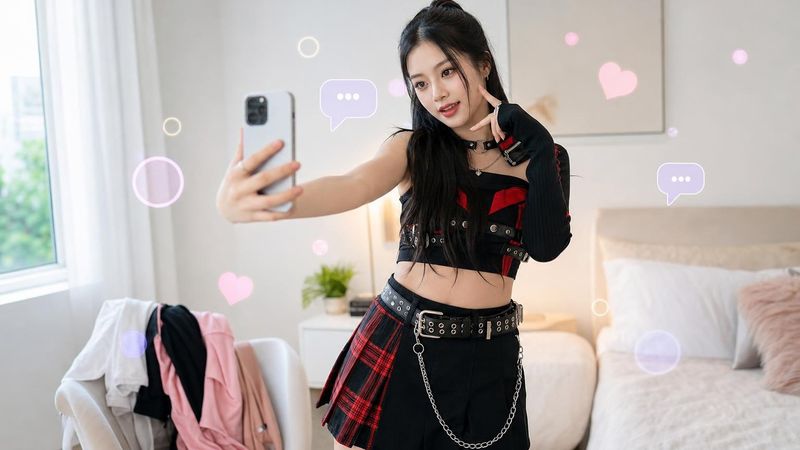
BLACKPINK star Jennie posted what looked like a playful, sexy TikTok, only to watch it turn into another round of online war over her body and image. The short clip, set to the viral “so you bend” audio, was meant as a confident transition into one of her festival outfits, but once it spread to X, malicious comments piled up fast.
For many K-pop fans, the backlash felt familiar. Jennie is one of the most visible female idols in the world right now, from her hit Dracula (Jennie Remix) with Tame Impala to front-row Chanel moments, yet every time she leans into a more openly sexy vibe, parts of the internet rush to label her “cringe” or “trying too hard.” Her latest TikTok is not just a minor controversy, it is a clear example of how female idols are policed whenever they try to own their sexuality on their own terms.
Inside BLACKPINK Jennie’s “sexy” TikTok that sparked backlash
The video was posted on Jennie’s official TikTok account, @jennierubyjane, after a run of European festival performances. Using creator Spencer Hedges’s “so you bend” sound, she joins a popular transition trend: the camera captures her, then cuts to her in a more revealing, performance-ready look as the audio hits.
In the clip, Jennie appears in a casual setup, then the transition reveals one of the fitted “sexy outfits” from her recent shows. The focus is on her silhouette and confident attitude as she moves to the beat, clearly treating it as a fun, flirty moment for fans rather than a full performance stage.
This is not her first time playing with sultry TikTok aesthetics. Earlier in the year, she “jumped on” the Dracula trend linked to her collaboration with Tame Impala, filming herself at Paris Fashion Week in a sparkly, netted Chanel top and skirt while mouthing her verse. Coverage framed that video as chic and fashion forward, and the trend helped keep Dracula on the Billboard Hot 100 for weeks.
Set against that context, the “so you bend” post looks like another casual entry in Jennie’s growing catalog of self-curated sexy content, not a dramatic departure. What changed this time was how the clip traveled outside TikTok.
From TikTok to X: how criticism of Jennie turned malicious
A pop culture account on X reposted Jennie’s video, praising her as seductive and glamorous. Once the clip hit that wider timeline, the quote-tweets shifted the tone. Instead of simple “this trend is overused” reactions, many replies targeted Jennie herself.
Some commenters claimed she looked “so unsexy trying to be sexy” or flat out called the video “cringe.” Others moved into body shaming, mocking the way she moved and insulting her appearance. A number of posts went further, attacking her skills by calling her “untalented” or saying she was embarrassing as both an artist and influencer.
The language highlighted a pattern K-pop fans know too well: critiques of a specific video quickly blur into attacks on a woman’s worth, attractiveness, and right to present herself as sexy at all. As of publication, there has been no public response from Jennie or her team about this particular TikTok.
At the same time, many BLINKs and casual viewers pushed back. Supportive replies described the clip as confident and age appropriate, praised her for having fun with trends like any other twenty-something, and called out the misogyny in demanding that a grown woman either stay “cute and innocent” or be branded “try hard” the moment she takes control of the sexy image that has been marketed around her for years.
Why Jennie keeps becoming a target whenever she is “too sexy”
This TikTok is only the latest entry in a long list of moments where Jennie’s sexiness became a public battleground. During the Born Pink world tour, her performance in a bra-style top with twerking moves drew mixed reactions, with some netizens calling the outfit and choreography “weird” or “too much.” Fans countered that similar or more explicit stages by Western pop stars and even some male idols are celebrated as powerful, not shamed.
Her acting debut in HBO’s The Idol sparked another wave of debate. Jennie’s provocative dance scene was slammed by some viewers as exploitative and overly sexualized, while others argued she delivered a strong, “hot” performance that matched the project’s adult tone. Either way, conversation fixated less on the role itself and more on whether it was acceptable for a K-pop idol to move that way on camera.
Even choices that are not overtly sexual get folded into the scrutiny. Jennie has faced backlash for wearing braids in a perfume campaign and for simplifying choreography while rapping, accusations that ranged from cultural insensitivity to laziness. The reaction to her “nurse” look in the Lovesick Girls video similarly turned into a moral panic, with critics focusing on her outfit more than on broader issues of how women and even minors are sexualized in K-pop.
All of this unfolds while Jennie stands at the crossroads of multiple industries: a main rapper and vocalist of BLACKPINK, a Chanel ambassador, and a soloist tied to a global rock-pop collaboration. With that level of visibility, every TikTok, outfit, or role is read as both K-pop content and luxury branding, which raises the stakes of how people judge her body and sexuality.
What Jennie’s TikTok controversy reveals about policing female idols online
Zoomed out, the backlash fits into a larger contradiction baked into the idol system. Female K-pop idols are often designed to be both sexy and pure, strong and independent yet cute and submissive. Agencies control their diets, styling, and choreography, building concepts that rely heavily on their bodies and faces.
When a company packages that sexiness on an album cover or music show stage, it is usually accepted as part of the job. When an idol like Jennie posts her own sexy TikTok or chooses a bolder acting role, the same audience can suddenly decide she has crossed a line, as if agency-driven sexualization is acceptable but self-directed sexuality is not.
There is also a clear gender gap. Male idols who rip shirts or perform grinding choreography are frequently praised for confidence and charisma. Western pop stars can twerk on major award shows and be framed as edgy or empowering. Female K-pop idols, by contrast, are often told they are either “not sexy enough” or “trying too hard,” with little space in between.
The consequences are not just about hurt feelings. South Korea has already introduced guidelines aimed at reducing overly sexualized performances by minors, a sign that officials recognize how intense the focus on bodies has become. Former idols like Sulli, who openly challenged norms around how women should dress and act, endured years of online harassment with tragic results, a stark reminder of how far this policing can go.
For international fans, including those in the United States, moments like Jennie’s “so you bend” TikTok are a chance to rethink how criticism is expressed. Saying a trend is not personally appealing is one thing. Spreading quote-tweets that mock a woman’s body or insist she is inherently “unsexy” for dancing in a short outfit is something else entirely.
As more female idols use TikTok and other platforms to control their own image, the reactions to clips like Jennie’s will keep revealing whether audiences are ready to let adult women in K-pop decide how they want to look, dress, and move, without having their worth put on trial every time they hit post.