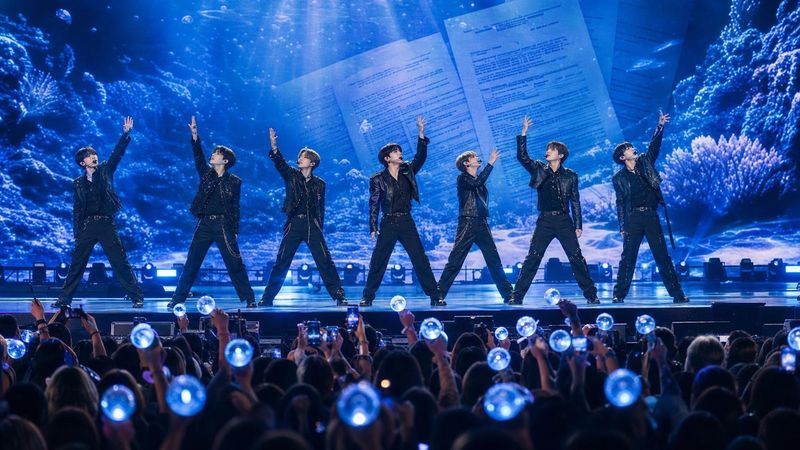
BTS are facing a new legal fight in the United States, as their hit single Swim becomes the center of a high profile plagiarism case. Three American songwriters have filed a copyright lawsuit claiming the track copies their earlier demo, triggering a firm denial from BigHit Music and putting the BTS Swim plagiarism lawsuit in the global spotlight.
The complaint lands at the peak of the group’s current Arirang era, with Swim already a Billboard Hot 100 No. 1, a 500 million stream giant on Spotify, and a staple of stadium setlists. For ARMY, the case raises urgent questions about how serious the allegations are, whether the members are personally involved, and what could happen to one of 2026’s biggest K pop songs.
Inside the BTS “Swim” plagiarism lawsuit
On July 8, 2026, U.S. songwriters Steve Cooper, John Sandler and Graylin Johnson filed a copyright infringement lawsuit over Swim. They say BTS’s hit is “substantially similar” to their own unreleased demo, also titled Swim, accusing the defendants of copying core musical and lyrical elements rather than creating the track independently.
The plaintiffs claim their demo uses a distinctive hook built around the word “swim,” along with specific harmonies, textures, rhythmic patterns and word choices, and argue that these allegedly show up in BTS’s version. They say they began pitching the demo to industry contacts in March 2025, including executives at Artist Publishing Group, and argue that some eventual Swim writers could have accessed it through that route.
Named defendants include HYBE, HYBE America, BigHit Music and several credited writers on Swim, such as Ryan Tedder. BTS leader RM and longtime producer Pdogg are among the song’s credited writers, but the plaintiffs did not name any BTS members as defendants. The lawsuit cites an expert report from musicologist Alexander Stewart, who concludes that key elements of BTS’s Swim were “unequivocally taken” from the demo, a claim that has not been tested in court.
BigHit Music denies copying and plans legal fight
BigHit Music quickly pushed back on the accusations, calling the filing one sided and insisting Swim is original. “The lawsuit contains only the plaintiffs’ unilateral claims,” the label said, adding, “We clearly maintain that ‘SWIM’ is an independent, original work. We will respond firmly through the legal process.”
The company’s language signals it views the complaint as a challenge to BTS’s creative reputation as well as to HYBE’s global catalog. Earlier this year, HYBE also warned of legal action over misinformation about Swim streaming numbers, showing a pattern of meeting disputes with aggressive legal responses rather than quiet settlements from the start.
As of now, there has been no separate public comment from individual defendants like Tedder, nor from BTS themselves. The case is only at the complaint stage, so no court has evaluated the alleged similarities or ruled on whether infringement occurred.
What this could mean for “Swim” and BTS
Swim is the all English title track of BTS’s fifth studio album Arirang, released March 20, 2026, and it opened at No. 1 on both the Billboard Hot 100 and Billboard 200. By late May, the single had already crossed 500 million Spotify streams, earned BRIT Silver certification in the U.K. and picked up Song of the Summer at the 2026 American Music Awards, which makes any legal cloud around it especially high stakes.
For now, nothing in the lawsuit requires platforms or promoters to pull the track. In typical U.S. copyright cases, defendants first file an answer or a motion to dismiss, then both sides exchange evidence, and only much later might a trial, settlement or dismissal happen. That means Swim is expected to stay on Spotify, YouTube and the Arirang World Tour setlist unless a court orders otherwise or the parties agree to changes.
- BTS members are not personally being sued over Swim.
- The plagiarism claims are allegations, not proven facts.
- Swim remains available on streaming and in concerts at this stage.
This is the first formal U.S. lawsuit targeting Swim, after months of online debates comparing it to other pop tracks that never moved into court. Fans watching the case unfold will be looking to future filings from HYBE and BigHit, and to any official updates, as the U.S. legal process starts to test how strong the plaintiffs’ claims really are.