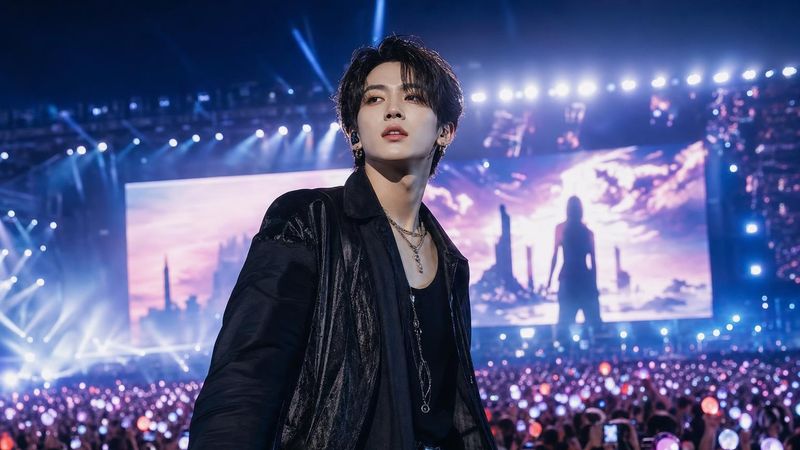
Jennie’s 2026 European festival summer became a clear measure of how far her solo career can travel beyond the usual K-pop circuit. Across headline appearances at Roskilde Festival in Denmark, Open’er Festival in Poland, and Mad Cool Festival in Spain, the BLACKPINK star brought a solo-focused set to major multi-genre stages while her Tame Impala collaboration Dracula reached the Billboard Hot 100 top 10.
The festival run and the U.S. chart milestone matter together. One reflects Jennie’s ability to command large live crowds with her own catalog, while the other places her voice inside a pop-radio crossover that reaches listeners far outside a single fandom.
Jennie’s European Festival Timeline
Jennie’s European run began on July 3, 2026, when she headlined Roskilde Festival’s Orange Stage in Denmark. Festival materials described her booking as the first time a K-pop artist had headlined the festival’s main stage, a significant spot at one of northern Europe’s best-known music gatherings.
Roskilde’s head of music, Thomas Soenderby Jepsen, said Jennie’s inclusion “reflects current trends and reinforces Roskilde’s identity as a festival moving toward the future.” The quote captures why the booking carried weight: Jennie was not simply appearing on a K-pop-focused bill, but leading a program built around multiple genres and international acts.
- July 3, 2026: Roskilde Festival in Roskilde, Denmark
- July 4, 2026: Open’er Festival in Gdynia, Poland
- July 9, 2026: Mad Cool Festival in Madrid, Spain
At Open’er, Jennie closed the festival the night after Roskilde. Mad Cool then completed the three-stop stretch, giving her another high-profile European festival stage within the same week. The sequence is often described in K-pop coverage as a European festival “triple crown,” though that label is better understood as a media narrative than a formal industry award.
Roskilde setlist archive: July 3, 2026
Roskilde’s official program scheduled Jennie on Orange Stage at 22:00 on July 3, describing it as her first Danish solo concert and the stage’s first K-pop booking. That confirms the program, not the order of songs actually performed.
The community-maintained setlist.fm record, checked September 11, lists the following 17 songs. Its 23 numbered entries also include video, talk and band interludes, which are not six additional Jennie songs. This is a reported setlist, not an official running order or our own full-show transcription.
- Filter
- Damn Right
- Mantra
- start a war
- Handlebars
- One of the Girls
- Love Hangover
- Dracula
- Seoul City
- F.T.S.
- lockitdown
- HEAVEN
- ExtraL
- with the IE (way up)
- Starlight
- Less than a Lover
- like JENNIE
The record marks lockitdown, HEAVEN and Less than a Lover as unreleased at the July performance. Their later release plans are distinguished below; this list does not establish where they were first performed.
Correction, September 11, 2026: Our former standalone Roskilde article called one song Little Less, claimed a Roskilde premiere and said Jennie had confirmed donating her entire fee to initiatives in Palestine and Congo. We have withdrawn those assertions. The checked sources do not substantiate that personal donation. Roskilde’s documented 2026 Orange Donation was a separate 500,000-kroner festival donation to Amnesty International Denmark, selected by Tessa. It neither proves nor disproves any private donation by Jennie.
A Ruby Set Built for Festival Crowds
The key to Jennie’s festival story is that the shows centered on her individual music. Her sets featured solo tracks including Like Jennie, Mantra, ExtraL, and Starlight, drawing heavily from her 2025 album Ruby and recent singles.
That distinction is especially important at Open’er. Set recaps described a performance of roughly 17 songs, with no BLACKPINK tracks in the setlist. Rather than treating her group identity as the default route to a crowd, Jennie leaned on material designed around her own voice, visual world, and pop instincts.
It does not erase BLACKPINK’s role in making Jennie one of the most recognizable names in K-pop. It does show that her solo catalog has become substantial enough to hold the attention of audiences accustomed to indie, rock, electronic, and mainstream pop headliners.
Open’er also gave fans material beyond the established Ruby era. Recaps cited unreleased songs including lockitdown, HEAVEN and Less than a Lover. Their release plan is now clearer: OA’s Fallen Angel notices place HEAVEN and Less than a Lover on the August 28 digital EP and identify lockitdown as a physical-exclusive track.
Why Dracula Reached Beyond K-pop
Dracula’s Billboard Hot 100 top 10 entry connects Jennie’s festival momentum to a broader U.S. pop story. Billboard documented a No. 8 position for the Tame Impala collaboration in its coverage of the charts dated July 11, alongside its first week at No. 1 on Pop Airplay.
Allkpop subsequently reported No. 5 for the Hot 100 dated July 18, up from No. 8 the previous week. The two positions concern different chart weeks. The later rank is attributed here to that readable press report; the Billboard article linked below directly documents the earlier week. Neither dated result establishes the song’s eventual career peak.
Tame Impala’s Kevin Parker is closely associated with alternative and psychedelic pop, while Jennie arrived with a K-pop audience shaped by BLACKPINK’s global scale and her own polished solo sound. The official remix reportedly places her vocals throughout the song, making it feel closer to a true two-artist record than a brief guest appearance.
A TikTok trend built around Jennie’s line, “My friends are saying, ‘Shut up, Jennie, just get in the car,’” also gave listeners a memorable entry point into the track. The song’s chart performance should not be reduced to a single viral moment, but the phrase helped illustrate how a distinctive lyric can move between fan spaces, short-form video, streaming, and radio.
Festival Credibility and U.S. Chart Reach
A Hot 100 peak and a festival headline slot measure different things. Charts track the audience a song can reach through consumption and radio, while a major festival booking tests whether an artist can sustain attention in front of people who may not know every release, fan chant, or group history.
Jennie’s European appearances offered the live version of the argument that Dracula makes on U.S. charts. She performed her own songs at Roskilde, Open’er, and Mad Cool, then brought Dracula to the Mad Cool stage, showing how a collaboration with pop-radio appeal could fit inside a broader solo performance.
This is also why the absence of BLACKPINK songs at Open’er was meaningful. It positioned the show as a Jennie set rather than a shortened extension of a group legacy. For casual festival-goers, that kind of programming can introduce an artist through the strength of the current music instead of requiring prior K-pop knowledge.
Copenhagen photos in the context of the festival week
Jennie’s Copenhagen Instagram carousel, posted during the Roskilde and Open’er stretch with the caption “copenhagenagainandagain,” offered a quieter contrast to the scale of the performances. The sauna, pool, city, and dessert images became part of the visual storytelling around a week otherwise defined by massive stages.
The accompanying sauna coverage described a skin-toned, patterned bikini. The point is the low contrast between the garment and the photograph, not actual nudity or evidence of a new fashion trend. These were images she chose to share; they do not identify a public fan destination or justify seeking out her private accommodation.
Her OA-era work connects music, fashion and personal image, but the central evidence here is musical: a solo-focused festival program and dated US chart results. The next chapter of the previously unreleased songs is covered in the Fallen Angel edition guide.
Source review, September 11, 2026: The earlier review could verify Billboard’s No. 8 result for July 11 but could not read the separate No. 5 report. That report has now been read and concerns July 18. The chart discussion distinguishes the dates and sources rather than treating either weekly position as a final career peak.