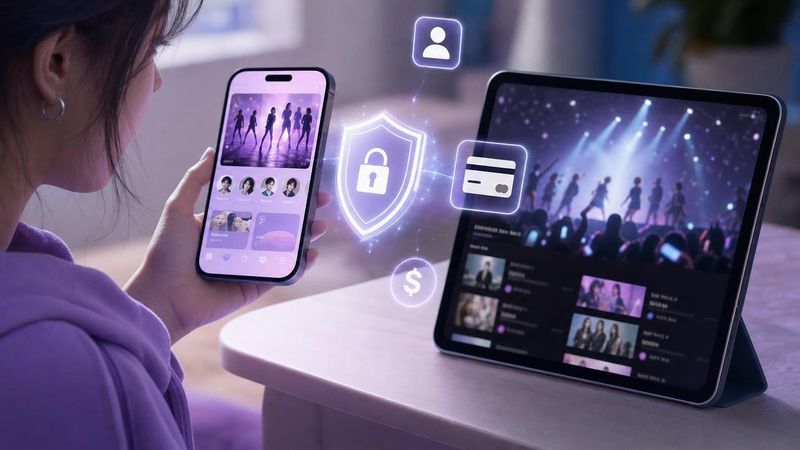
Weverse data breach concerns have put a sharper focus on the personal and purchase-related information held by K-pop’s biggest fan platforms. Weverse said 422,584 account-level records were affected, while a separate incident at Korean streamer Tving involved approximately 39.5 million accounts and source-code files.
The cases are not known to be connected, and neither report establishes how many American or other international users were affected. Still, the two incidents offer a lasting reminder that fandom apps have become more than places to watch a livestream or follow an artist: they can also hold subscription, commerce, and transaction data.
What the Weverse data breach exposed
Weverse, the global platform operated by HYBE subsidiary Weverse Company, said the affected records included internal user identification data and purchase-related details. The exposed information included purchase type, payment provider, currency, purchase amount, canceled amount, purchase date and time, purchase status, and refund date and time.
Weverse said names and contact information were not included in the exposure. Its internal identification codes are created when users sign up and are used to distinguish accounts within the company’s systems, rather than functioning as public-facing personal information.
The platform also said the information exposed on its own was unlikely to enable payment fraud or unauthorized fund transfers. In a separate statement cited by Korean media, Weverse said there was “no possibility of fraudulent charges or transactions with the leaked information.”
That distinction matters, but the incident still involves information tied to fan spending. For users who purchase memberships, digital services, merchandise, or other platform-linked offerings, transaction histories can reveal meaningful details about how they use a fandom service.
How Weverse responded to the security breach
Weverse began an internal investigation after the Korea Internet and Security Agency, known as KISA, flagged potential security weaknesses. The company subsequently notified KISA of the breach and said it had notified affected users in line with regulatory requirements.
Its stated technical response included stronger access controls for the API that processes payment information. Weverse also said it removed internal identification data from potential external exposure.
The company apologized after the breach was identified and said it planned to pursue legal action against those responsible. The available reporting does not identify an attacker or provide later details about a legal case.
For K-pop fans, Weverse’s role helps explain why the breach drew attention beyond a typical app-security story. The service supports artist communities and livestreams, while paid subscriptions can allow users to send direct messages to favorite artists. HYBE acts including BTS, SEVENTEEN, and LE SSERAFIM are among the artists associated with the platform in the source reporting.
Why the Tving data breach is a larger case
Tving’s reported compromise was far broader in scale and in the categories of information involved. A Ministry of Science and ICT investigation found that approximately 39.5 million Tving accounts and source-code files had been compromised.
That total should not be treated as 39.5 million individual people. It included 22.06 million active accounts, 17.37 million inactive accounts including dormant and terminated accounts, and 110,000 test accounts.
The reported Tving data included names, mobile phone numbers, email addresses, dates of birth, and payment histories, across 20 categories and 70 types of data. Some phone numbers and email addresses were encrypted, but the encryption keys were also reportedly compromised, which could potentially allow the information to be restored to its original form.
Unlike Weverse’s reported exposure of internal identifiers and purchase-linked data, Tving’s case involved more direct personal details. No secondary damage had been officially reported in the available coverage, and the identity of the attacker remained unknown.
Why K-pop fan platform privacy matters
Modern entertainment platforms often combine media, commerce, subscription tools, and direct artist-to-fan communication in one account. That convenience is central to the global fandom experience, but it also means a platform can hold more than a username or viewing history.
The Weverse case illustrates the privacy stakes around transaction-linked fandom. Even where a company says names, contact information, and payment fraud risk were not part of the reported exposure, fans may still want clarity about what account information a service stores and how it is protected.
The Tving incident shows a different level of risk. Its reported exposure included contact details and birth dates alongside payment histories, making the comparison useful without suggesting that the two breaches had the same impact.
Neither incident provides a country-by-country breakdown of affected accounts. It is therefore not possible to determine from the available reporting how many users in the United States or other overseas markets were involved.
A timeline and the support users were offered
- On September 3, 2026, KISA reportedly flagged potential Weverse security weaknesses. Tving also held a Seoul briefing during that period.
- On September 4, Weverse reportedly notified KISA after its internal review.
- On September 6, Weverse posted its breach notice and apology.
- On September 7, Korean media detailed the Weverse incident and Tving’s user-compensation plan.
- Tving’s stated application window for eligible users ran through September 30, 2026.
Tving pledged to increase its information-security investment through 2030, targeting roughly four times what it had spent on security during the previous five years. It also said it would expand its cybersecurity workforce.
Its compensation package included a year of insurance coverage worth up to 3 million won, about $2,200, per person for cyber financial fraud, online shopping fraud, and person-to-person transaction fraud resulting from hacking or phishing. Eligible users could also apply for 5,000 won in Tving Points, but the benefits were not issued automatically.
The long-term question for both services is not only whether further harm is reported, but how clearly platforms communicate what they collect, what was exposed, and what protections have changed for the fans who rely on them.