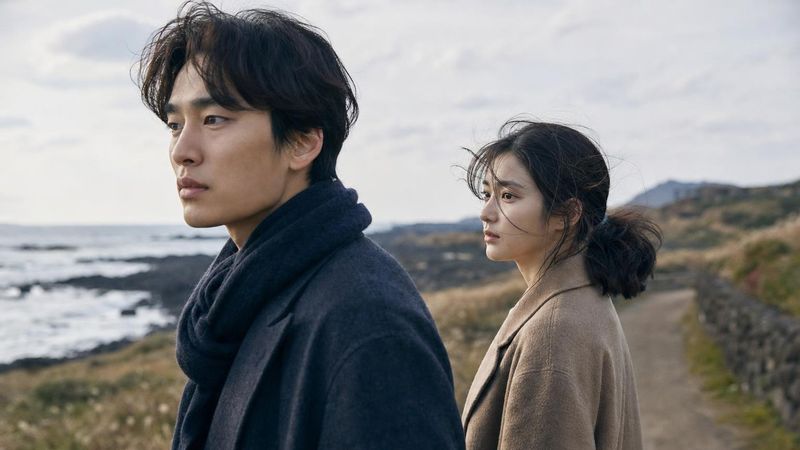
Hong Sang-soo’s Locarno win is more than another festival trophy for a respected Korean director. His Best Director prize for Nowhere to Lay My Eyes at the 79th Locarno Film Festival offers a timely entry point for viewers who know Korean entertainment through streaming, K-dramas, or blockbuster thrillers but have not yet encountered his quieter kind of cinema.
Hong’s films rarely rely on huge plot twists or glossy spectacle. Instead, they make space for tense conversations, small gestures, uncomfortable silences, and emotions that surface slowly. That approach can feel deceptively simple, which is exactly why the Locarno recognition helps explain why international festivals have kept returning to his work for decades.
What Hong Sang-soo won at Locarno
Hong received Locarno’s Best Director award for Nowhere to Lay My Eyes, his 35th feature film. The Korean film premiered in the festival’s International Competition, alongside a lineup of international arthouse titles selected for the Golden Leopard.
The story follows Sang-hee, played by Kim Min-hee, as she travels to Jeju Island with her younger brother to find their mother, whom they have not seen in about 10 years. Their parents separated when they were children, leaving the siblings with a long emotional distance to navigate before the reunion can even begin.
Kim shared Locarno’s Best Performance prize with Italian actor Monica Bellucci. Kim also worked as production manager on the film, making her role in the project extend beyond its central performance.
For viewers searching for Nowhere to Lay My Eyes, the key detail is that its international recognition does not yet confirm a U.S. streaming platform, digital rental date, or wide theatrical release. The August festival reports establish its premiere and awards, not a distribution agreement. A festival screening and an on-demand release are different kinds of availability; this article is not a live streaming-directory check.
Locarno has followed Hong’s career for years
This was not a surprise breakthrough for Hong. It was his fifth Locarno invitation, following earlier appearances with Our Sunhi, Right Now, Wrong Then, The Day After, and By the Stream.
He previously won Locarno’s Best Director prize for Our Sunhi in 2013. In 2015, Right Now, Wrong Then received the festival’s top Golden Leopard prize, a major honor that placed one of his most discussed films at the center of international arthouse conversation.
His Locarno record fits into an even longer festival history. Hong’s debut feature, The Day a Pig Fell Into the Well, won Rotterdam’s Tiger Award in 1997. Hahaha won Cannes’ Un Certain Regard prize in 2010, while The Woman Who Ran earned him Berlin’s Silver Bear for Best Director in 2020.
That pattern matters because Hong is not a director whose reputation depends on a single acclaimed title. Nowhere to Lay My Eyes is his 12th feature since 2020, reflecting a steady, independent filmmaking practice rather than a conventional studio release cycle.
What a Hong Sang-soo movie feels like
Hong’s films often focus on artists, intellectuals, friends, couples, and family members whose casual conversations gradually become more revealing. A meal, a drink, a walk, or an awkward reunion can carry the same emotional weight that a larger film might place on a major confrontation.
His signature style includes long takes, sparse music, abrupt zooms, modest budgets, and dialogue scenes where people talk around what they actually mean. He is known for developing scripts during production, writing scenes on the morning of a shoot instead of working from a fully completed screenplay.
That process can make his work feel intimate and lightly unpredictable. Characters may repeat themselves, misunderstand each other, or reveal a new side of a relationship through a detail that initially seems ordinary.
Nowhere to Lay My Eyes places those familiar qualities in Jeju’s natural setting. The film uses the island’s waves, wind, and changing weather around a mother-daughter reunion marked by hesitation rather than oversized melodrama. Its reported 72-minute runtime also makes it a compact example of Hong’s patient but focused storytelling.
Why the new film is a useful starting point
The family premise gives newcomers a clear emotional doorway into Hong’s style. Sang-hee is not entering Jeju to solve a mystery or chase a dramatic revelation. She is returning to a relationship shaped by separation, memory, and the difficult question of what remains unsaid between parents and children.
That emotional directness is useful for streaming-era viewers who may be used to choosing films from a thumbnail, a short description, or a recommendation feed. You do not need a detailed knowledge of Korean film history to understand the tension of seeing a parent after years apart.
Hong’s work asks for a different kind of attention than plot-heavy Korean thrillers or bingeable dramas. The point is often found in the rhythm of a conversation, a pause after a remark, or the gap between what someone says and what they seem to feel.
The Locarno prize gives that small-scale approach a larger context. It shows that a Korean film can be internationally significant without being designed as a global franchise, an awards-season spectacle, or a high-concept streaming event.
Where beginners can go after Locarno
Right Now, Wrong Then is a logical title to seek out first. Its Golden Leopard win makes it an important part of Hong’s Locarno history, and its chance encounter between a film director and a painter reflects his interest in perspective, conversation, and the ways relationships can shift through small choices.
The Woman Who Ran is another useful point of reference because it earned Hong the Berlin Best Director prize. Its place in his award history helps new viewers understand that the 2026 Locarno honor belongs to a sustained international career, not a late discovery by festival audiences.
Kim Min-hee’s earlier Locarno Best Performance recognition for By the Stream is also worth noting for viewers following her collaborations with Hong. Her second Locarno acting honor for Nowhere to Lay My Eyes reinforces how central her performances have become to this period of his filmography.
For Nowhere to Lay My Eyes, viewers should watch for confirmed festival screenings, distributor announcements, or legal digital availability in their region. Until those details are announced, Hong’s Locarno win remains most useful as an invitation to explore the Korean auteur behind the award, one quiet conversation at a time.