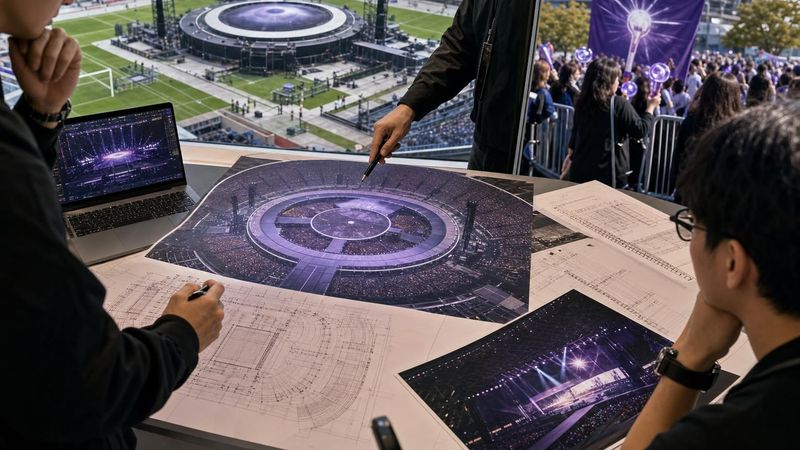
Situation checked September 11, 2026: The Ministry of Sport’s July 21 stadium authorization is included below. DG Medios lists the October 14, 16 and 17 Santiago dates; its older April presale instructions are not evidence that tickets remain available today.
BTS’s Chile stadium dispute reached an important decision on July 21, 2026: Chile’s Ministry of Sport announced that the National Sports Institute (IND) had authorized use of Estadio Nacional after reviewing a revised production proposal. The earlier rejection and conditional review should no longer be described as the latest decision on the venue.
The Santiago dates on the ARIRANG World Tour are October 14, 16 and 17. For ticket holders, the useful distinction is between the stadium authorization, which has now been announced, and practical concert instructions such as entry times and access arrangements, which must come from the promoter and ticketing operator.
What the July 21 decision changed
The ministry’s July 21 announcement says IND approved stadium availability following changes intended to protect the sports infrastructure. The revised plan kept heavy vehicles off the pitch during construction, used cranes from the athletics track, and included a ventilated protective covering. An engineering assessment and a shorter recovery period were also part of the proposal.
This is a later decision than the July 6 agreement to reconsider the original plan. It supports saying that stadium use was authorized; it does not establish every ticketing or operational detail for an individual attendee.
Why there was a dispute in the first place
Early July reporting described IND’s refusal to approve use of the central field at Estadio Nacional Julio Martinez Pradanos. The concerns involved the demands of the proposed concert production on a venue that also needs to remain available for sport.
A central, 360-degree stage makes this a practical production issue: equipment has to reach the middle of a playing surface, and both installation and removal affect that surface. Selling a concert ticket and obtaining approval for a particular stadium setup are different steps. Confusing them was one reason the early coverage generated so much uncertainty.
The initial refusal was not an announcement that BTS had canceled its Chile concerts. Likewise, the subsequent offer to review a revised proposal was not yet the final authorization. Those distinctions remain important when reading headlines published before July 21.
The timeline, with the later decision included
- July 2: Reports described IND’s refusal to authorize the proposed use of the central field.
- July 5: ARMY demonstrations took place in Santiago and other Chilean cities, according to contemporary coverage.
- July 6: Authorities agreed to examine a revised proposal under technical conditions.
- July 21: The Ministry of Sport announced IND’s approval following changes to the production plan.
- October 14, 16 and 17: The announced Santiago concert dates.
The demonstrations made the venue dispute visible, but the published reason for the eventual approval was the revised technical proposal. The sequence does not by itself prove that protests alone secured the decision.
What ticket holders still need to check
For arrival arrangements, ticket conditions, accessibility and later operational changes, consult DG Medios, Ticketmaster Chile and BTS’s official channels for your event date. The promoter’s older April sale dates are historical, not a current inventory check. An old venue-dispute headline is not an instruction to change a booking or buy a replacement ticket.
The distinction also applies to seating: an authorization to use the stadium is not, by itself, a new seat map. Check instructions attached to your own ticket and event date instead of treating general social posts as advice for every section.
Correction, September 11, 2026: This article previously left the stadium decision unresolved based on reporting through early July. It now includes the ministry’s July 21 approval. Unverified production-weight figures and an unsupported quotation attributed to the minister have been removed.