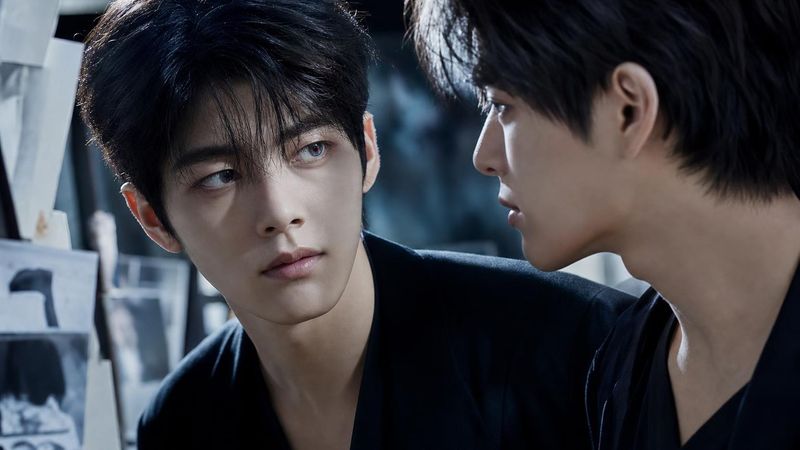
Ryu Jun-yeol’s Mousetrap dual role works because the actor does not treat Moon-jae and the Rat as a flashy before-and-after transformation. In Netflix’s psychological thriller, he plays a reclusive novelist whose name, face, and life are stolen, as well as the mysterious double who takes his place.
That setup makes every small choice matter. Rather than relying on dramatic prosthetics or an obvious costume switch, Ryu built two characters who look almost identical but feel unnervingly different, giving viewers a spoiler-light set of clues to follow throughout the series.
What Mousetrap Is Really About
Netflix’s Mousetrap begins with a nightmare rooted in Korean folklore: an animal that consumes someone’s discarded fingernail clippings can transform into that person. The series expands that eerie idea into an identity-theft thriller, following writer Moon-jae after a being known as the Rat steals the life he has built.
Moon-jae’s fight to reclaim himself draws in No-ja, a loan shark played by Sul Kyung-gu, who is trying to recover money tied to Moon-jae. Lee Kyu-hyung plays detective Sun-yong, another figure pursuing the truth behind the impersonation.
The show is adapted from the webtoon Field Mouse, but its central tension goes beyond the mechanics of a supernatural double. Who gets to define a person when their appearance, voice, reputation, and finances can all be taken away? That question is at the heart of Ryu’s first dual role.
Ryu Jun-yeol Used His Voice First
The clearest difference between Moon-jae and the Rat is not immediately visual. Ryu said he used a higher vocal register for the Rat, while Moon-jae speaks in the actor’s more natural lower tone.
The choice was deliberate. Director Kim Hong-sun initially asked Ryu about digitally blending his voice with another actor’s voice, but Ryu believed the performance would land more strongly if he created the contrast himself.
“I felt it would resonate more with the audience if I did it myself,” Ryu explained. He saw an opportunity in the way people perceive his voice differently, adding, “I knew I had a flexible range, so I thought, ‘Why not use both in one project?’”
For viewers, that makes sound a useful guide, especially in scenes designed to blur the line between the two men. The Rat’s higher tone is not simply a villain signal. It is part of the character’s unsettling attempt to occupy a life that does not belong to him.
Why the Look Stays So Restrained
Ryu and Kim did not want the two roles separated by an oversized makeover. At the production presentation, Ryu said their goal was to work through “very delicate parts like personality, gaze and the character’s appearance,” rather than force an obvious distinction.
Hair and makeup helped shape that effect, but the team avoided excessive changes. The Rat has a subtle contact lens detail, including a small visible pattern, yet Ryu stressed that it is meant as an extra texture for observant viewers, not a clue audiences must catch to understand the story.
“We wanted to avoid excessive makeup,” Ryu said. “Instead, I wore contact lenses with a subtle spot for the Rat character.”
That understatement fits the premise. If the Rat looked too different from Moon-jae, the series would lose the disturbing logic of its identity crisis. The characters need to be close enough that viewers feel the same uncertainty hanging over Moon-jae’s world.
Identity Is the Real Performance Challenge
Ryu was interested in Mousetrap before its ending had been finalized because of the emotional question inside its high-concept premise. He said he connected with the script’s exploration of jealousy and inferiority, feelings that can begin as small private wounds before becoming destructive.
His approach also came from the philosophical ideas he saw in the original webtoon. At the Seoul press event, Ryu said the story made him think about “how we prove and define who we are,” including whether the person someone calls “me” is truly that person.
That perspective explains why Moon-jae and the Rat cannot be reduced to victim and imitator through broad acting signals. Ryu’s performance is built around behavior, expression, and voice because the series is asking its audience to consider what actually makes an identity recognizable.
Kim said he cast Ryu because Moon-jae is neither a straightforward good person nor the center of a conventional heroic narrative. The director also praised the actor’s intense on-set discussions and willingness to bring ideas and alternatives to the role.
What to Notice During a Mousetrap Binge
Ryu previously faced a related audience-believability challenge in the 2022 film The Night Owl, where he had to make viewers accept a visually impaired character despite his own sight. For Mousetrap, the task was more internal: making one face carry two distinct presences.
His advice is effectively a viewing guide. Listen for the shift between Moon-jae’s grounded lower voice and the Rat’s higher register. Pay attention to how a gaze lingers, how facial expressions land, and whether a scene’s emotional temperature changes before the plot spells out why.
The details are designed to reward close viewing without punishing anyone who misses one contact-lens pattern or vocal inflection. In a thriller about someone stealing a life piece by piece, Ryu’s most important trick is making the smallest differences feel impossible to ignore.